How to help our neighbors in Venezuela
June 30, 2026
When disaster or crisis happens, Americans rush to provide help because we are generous people.
When we see major devastation from a natural disaster – as our neighbors in Venezuela experienced last week – we want to send items to meet basic needs: food, water, clothing, and medical supplies.
But how do we ensure our response is effective....and not making a "second disaster" for those we're trying to help?
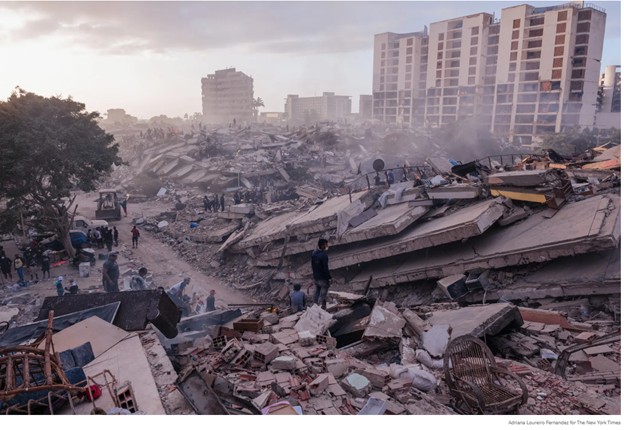
At Mission Outreach we’ve already received several questions asking how we can help the people of Venezuela, who suffered back-to-back 7.2 and 7.5-magnitude earthquakes last week. The suffering is unimaginable, and our hearts go out to all people who are affected.
Our good intentions, however, cannot lead to irresponsible "help." That's why Mission Outreach never rushes to send items in the wake of a disaster.
The intent to send aid fast after a disaster is good and noble. The reality, however, is that knee-jerk, large shipments of materials in the immediate aftermath of a crisis often cause more problems called the “second disaster.” This happens when well-intentioned, but inappropriate and unrequested donations of items, flood a disaster scene and cause additional problems.
We'd like to explain what Mission Outreach does, and doesn't do, to respond to natural disasters, and how we best fit in to help (in the short and long term) when our neighbors globally have experienced a crisis.
The Parable of a "Second Disaster"
Here's a minor story that is analogous to what often happens during major crises, and how good intentions can go very wrong:
Let’s say your tire blew out completely and you’re sitting on the shoulder of an interstate highway. You call for a tow-truck and learn it will be about a 30-minute wait for the truck to arrive. Cars traveling on both sides of the interstate see you, and they feel terrible for you.
One passing car contains a social-media savvy passenger with a lot of compassion. He snaps a photo of your car and posts a “needs help” message on a local Facebook page with a few thousand followers. The concerned community leaps into action. Within a few minutes, 40 people jump into their cars to come assist you. Thirty of them don’t know how to change a tire, but really want to help anyway.
Noting that your tire is the problem, another Facebook follower on the thread posts a “tire collection” for you. And because it’s raining, they welcome a donation of a raincoat for you too. They quickly collect seven tires and a garbage bag full of raincoats, umbrellas, and paperback books (so you have something to do while you wait). A few of the tires were sitting in someone’s backyard for a several years and are pretty worn, but that should be okay. After all, something is better than nothing when you’re in trouble, right?
These donors get in their cars too, as they are eager to deliver the coats, umbrellas, and tires. They can’t wait to see your grateful and happy face as you receive these gifts in your time of need.
Within 25 minutes, traffic on the interstate is slowed almost to a standstill trying to get around all the cars parked on the side near yours. The tow-truck is a few miles back and there’s no hope that it's getting through this jam any time soon.
What was a crisis – being stranded on the side of the interstate – is now multiple disasters. And what are you supposed to do with all these old tires?
This story may seem completely unrealistic, but several components of it reflect actual common problems of the “second disaster.” It could be items that seem to be useful, but aren’t actually needed or are in quantities unable to be stored and processed. It could be blocking roads and runways so that response crews can’t get through. It could also be completely inappropriate donations – that cause the recipient time and money to handle and dispose of – and can even cause harm.
Mission Outreach's role to help Venezuela
Mission Outreach works closely with the Catholic Health Association Global Health Council and receives information from on-ground, reputable sources such as Catholic Relief Services (CRS), Americares, and Caritas. We listen to these partners to discern responsible help, both in the short and long term for the people of Venezuela.
Because right now the focus is still on rescue and recovery of people, organizations like Mission Outreach are being asked not to send additional donations of items at this time. Roads must be kept clear to allow construction and rescue crews through.
What Mission Outreach can and will do is continue to build our Global Emergency Response fund and identify items in our current inventory that would most likely be useful if we are asked to make a shipment. Then, when/if we do receive specific requests from on-ground humanitarian partners who can get needed items in, we will be able to respond fast.
Mission Outreach is better positioned to support hospital/healthcare infrastructure rebuilding in the months (and years) ahead; for those in Venezuela, and any time a natural disaster or crisis happens. The support of HSHS and our other member health systems (Ascension, OSF HealthCare, Prevea, and Mercy) makes this long-term recovery support possible, and we are grateful to all who contribute to our operations.
Supporting Immediate Disaster Relief Efforts
If people do want to provide an immediate donation to disaster relief efforts, cash is best. Our recommendation is to support either Americares (www.americares.org) or Catholic Relief Services (www.crs.org). They are both reputable organizations. Americares is working with the PanAmerican Health Organization (PAHO) and the United Nations Office for the Coordination of Humanitarian Affairs. CRS is working with Caritas, Venezuela.
Also, financial donations to Mission Outreach support our efforts to respond to natural and human-led disasters and in promoting peace globally.
Prayer and Solidarity
Most importantly, in the tradition of the Hospital Sisters of St. Francis, our actions to help must be rooted in prayer and solidarity with those who are suffering. Please remember the people of Venezuela in your prayers and time of reflection.
God of healing and mercy, we come before you with our hearts filled with grief as we see the devastation.
We pray that your presence would be felt by those who are grieving, who are injured, who have lost their homes and livelihoods.
We pray for wisdom and safety for those who are responding to the people in need and the many challenges left in the wake of the event.
We pray for our church, that it may be a witness to your compassion and care for all who suffer.
God, you are our refuge and strength, an ever-present help in times of trouble. For this we give you thanks and ask that you hear our prayers for the people of Venezuela.
- Adopted from a prayer of the Mennonite World Conference for the people of Japan following the earthquake and tsunami of March 11, 2011.
For more information about Mission Outreach's response or how you can help, contact Erica Smith at [email protected]
Photo Credit: Photos: Venezuela Earthquakes Cause Death and Destruction in Caracas, La Guaira and Beyond - The New York Times