Right Care, Right Time
Who knew that a stubbed toe could hurt so much a day later? It’s swollen and turning purple. It even hurts to walk on it. You’re guessing you broke it, but you don’t know what to do about it. Where do you go?
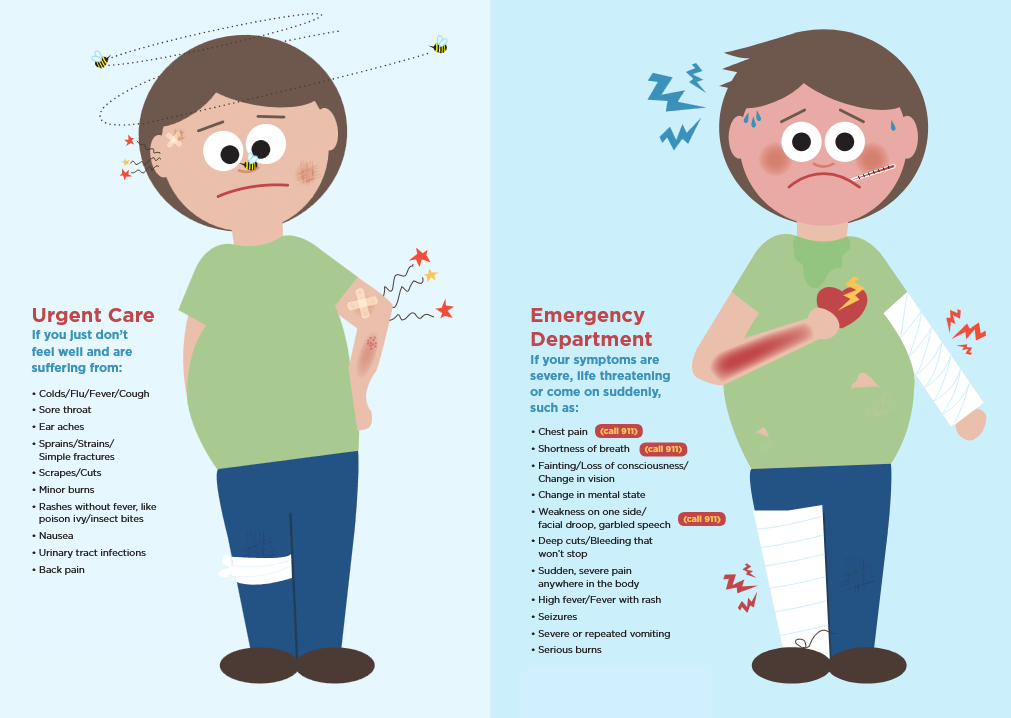
The emergency room might come to mind. After all isn’t that where they fix broken bones? You might be surprised that a broken toe or finger can be treated at an urgent care.
Choosing the right level of care at the right time can save time and even your life. While some may immediately go to the ER for a number of health concerns, many issues can be resolved at an urgent care location or with your regular doctor.
When to Go to ER
It’s also important not to downplay what you’re feeling. Calling your regular doctor or going to urgent care for severe symptoms can cause dangerous delays in your care. While these locations are staffed by skilled health care professionals, the ER is equipped to offer immediate and ideal treatment for life-threatening symptoms.
When to Call 911
If you are experiencing heart attack symptoms like chest pain and difficulty breathing, don’t even drive to the emergency room, call 911.
Emergency Medical Technicians (EMTs) can begin life-saving procedures in the ambulance while you’re traveling to the hospital.
When to Go to Urgent Care
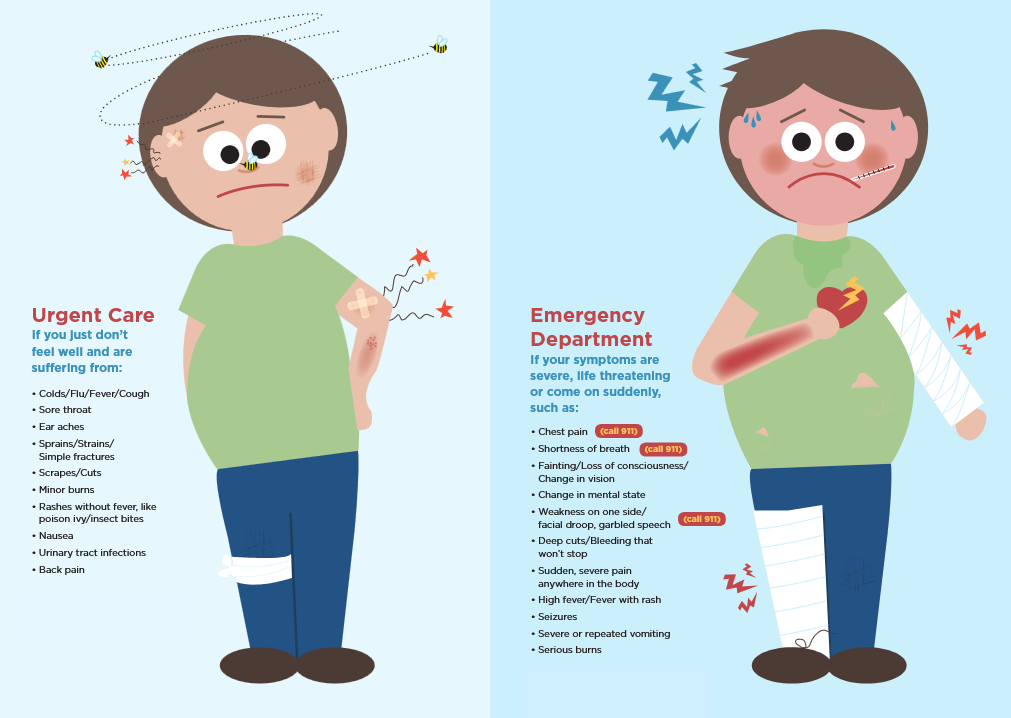
A hospital emergency department is all about being prepared for every possible health emergency. That means a variety of screening, testing and treatment capabilities and a wide range of specialized staff, nurses and doctors.
That high level of preparedness comes with a cost, though. The ER isn’t the right setting for minor cuts, average flu symptoms or muscle strains.
When to See Your Primary Care Provider
While you may go to an urgent care, see specialists or even visit the hospital occasionally, your primary care provider (PCP) oversees your general health. A PCP may be a doctor, nurse practitioner or physician assistant.
For your best health, we recommend establishing care with a PCP before you are sick. Often after a hospital or urgent care visit, your PCP manages your follow-up care, especially since they know you and your health history.
PCPs specialize by age group and it’s up to you to decide what focus works best for you and your family. There are three types of PCPs:
- Pediatricians care for patients from birth to eighteen years old.
- Family medicine providers care for patients of all ages.
- Internal medicine providers care for adults only.
When you're not feeling well, making decisions can feel overwhelming. The good news is that you don't have to figure it out alone.
If you're ever unsure whether your symptoms need emergency care, urgent care, or a scheduled appointment, trust your instincts, and don't hesitate to call your primary care provider's office for guidance. They can help point you in the right direction so you get the care you need, when you need it.
- Screenings based on your medical history and demographics
- Preventive care
- Treatment for acute, minor and chronic conditions
- Referrals to specialists