
Don't Wait for Tryout Week: What a Sports Physical Actually Checks For
July 27, 2026

It happens every August. Tryouts are Monday, the form is due, and on Saturday you are calling around for any open slot to get a sports physical signed. The visit seems like a formality: a signature, a checked box, done.
Two myths drive that scramble:
- First, "a sports physical is basically my kid's annual checkup."
- Second, "any quick clinic visit will do, any time before the season."
Neither is true, and believing them can cost your athlete the start of their season.
What a Sports Physical Actually Is (and Isn't)
A sports physical has a formal name: the pre-participation physical evaluation, or PPE. In plain language, it's a focused exam built to answer one question: is it safe for this young person to play this sport right now?
That's narrower than it sounds, and that’s the key point.
Dr. Brian Klostermann, family and sports medicine physician, said, “A PPE is not a replacement for your child's annual well-child visit, which is a comprehensive exam covering growth, development, vaccines and the full picture of their health. The two work best together to get a full picture of your child’s health, ideally with your child's regular provider.”
Most state athletic associations require a PPE, but the point is bigger than simply paperwork. It's the one built-in moment to catch something before it becomes a problem on the field.
What It Actually Covers
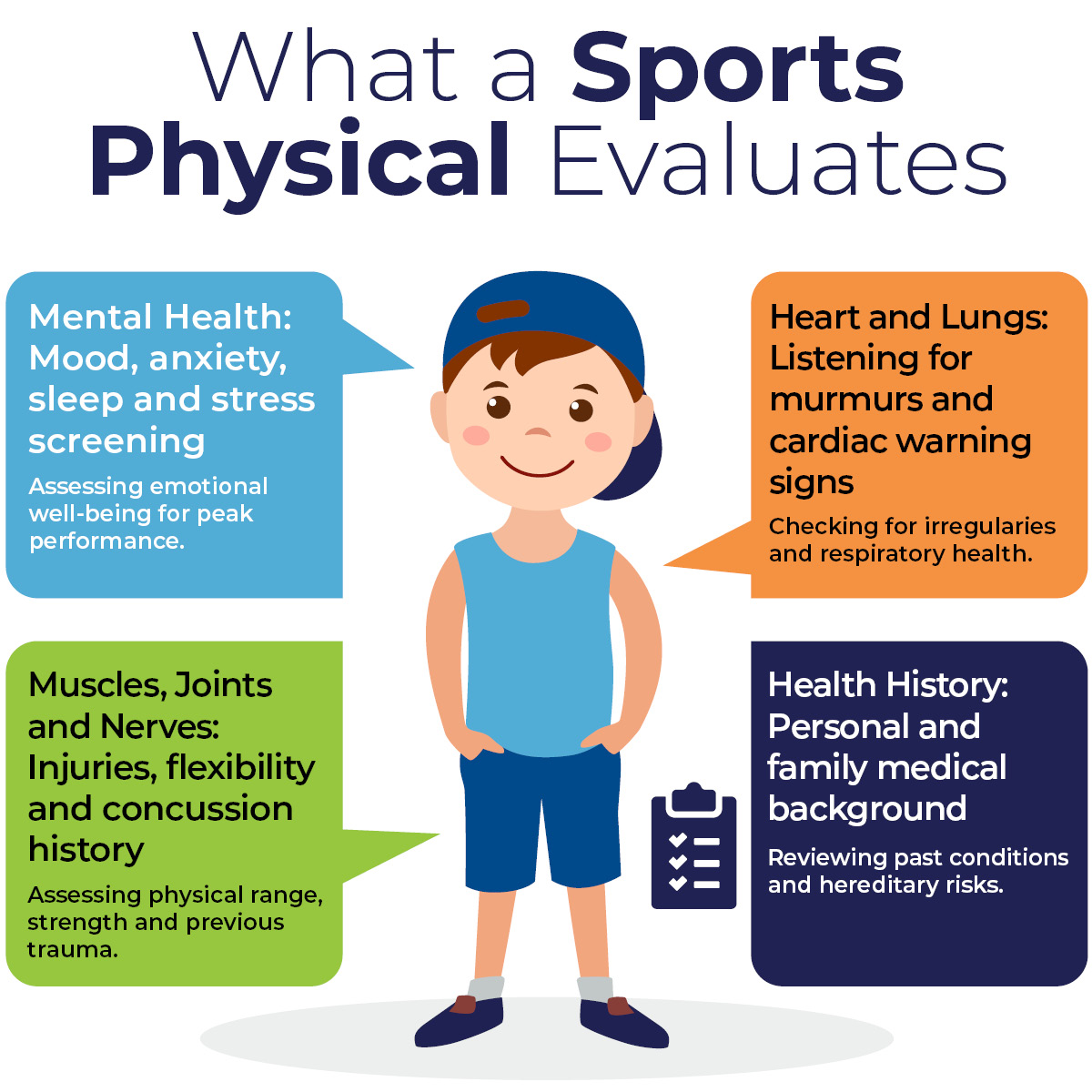 A thorough PPE moves through four areas:
- History review. This is the most important part, and it's often done in two stages: privately with the parent, then privately with the athlete alone. That second conversation gives a teen the space to disclose something (symptoms, stresses, substances, anything) they might not say with a parent in the room. It isn't about secrecy; it's about getting an honest picture.
- Heart and lungs. The provider listens to the heart and lungs and reviews personal and family cardiac history, screening for warning signs like fainting during exercise, chest pain, or a family history of sudden death. A standard PPE is a screening exam designed to flag athletes who need deeper testing like an ECG or echocardiogram. That's not a step to fear; it's how screening is supposed to work.
- Muscles, joints and nerves. This part examines joints, flexibility, strength and old injuries that never fully healed. This is also where prior concussions and concussion history are reviewed, which matters enormously for contact sports.
- Mental health screening. A current PPE commonly includes screening for depression and anxiety, plus questions about sleep, and about bullying or hazing.
Dr. Klostermann shared, “Youth athletes carry real pressure, and this is one of the few built-in moments where someone checks on the mind, not just the body."
A PPE ends in one of three places: cleared, cleared with limitations, or needs follow-up.
Why Timing Changes What's Possible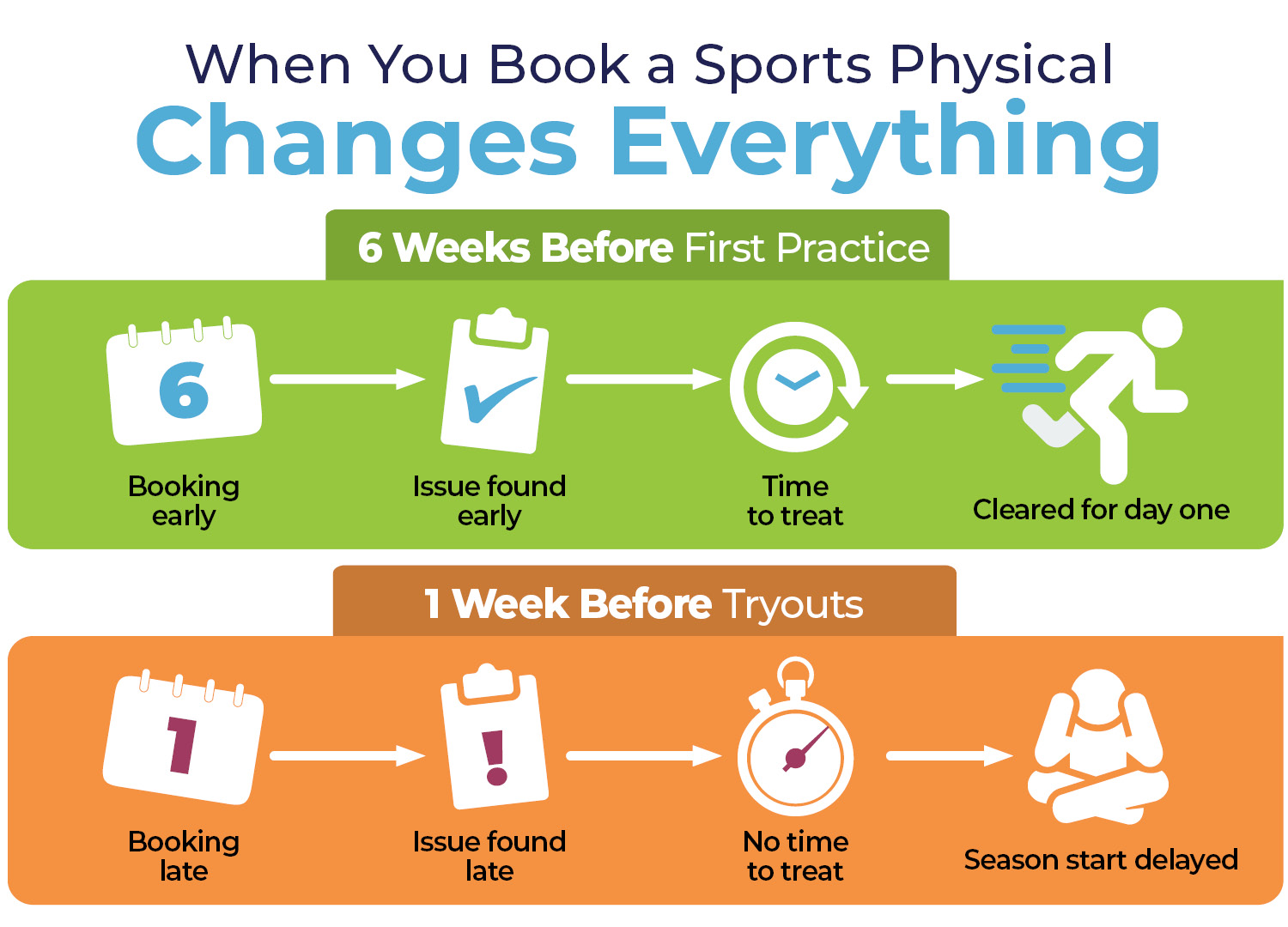
Schedule your child’s PPE at least six weeks before the first practice. That window allows for treatment time if it’s needed.
A murmur may need an echocardiogram. Asthma may need a new action plan and inhaler. A healing fracture may need imaging. And none of that gets sorted in the 48 hours before tryouts.
Dr. Klostermann explained, "When I find something six weeks out, we have time to act. That same finding the week before tryouts means the athlete sits and waits. Starting early gives you runway time."
When to Book
For fall sports across the Midwest, that six-week math lands your booking window in late July or early August.
When you go, bring:
- Insurance card
- Prior records or a previous PPE form
- A current medication list (including inhalers and supplements)
- Family cardiac history, especially any sudden or unexplained deaths
State requirements vary. In Illinois, the Illinois High School Association (IHSA) sets the standard; in Wisconsin, it's the Wisconsin Interscholastic Athletic Association (WIAA). Check your school's athletic office for the current form, or visit the IHSA or WIAA website to download it.
The best move you can make: schedule with your child's regular provider or medical home as they know your child’s history. If you don’t have a family physician, find a primary care provider near you.
This content is for informational purposes only and does not constitute medical advice. Consult a qualified healthcare provider for diagnosis and treatment.