Full Circle: How a St. John’s Nurse Turned Her Breast Cancer Diagnosis Into Purpose for Patients
November 12, 2025
Story originally featured on WAND News. Watch the full video
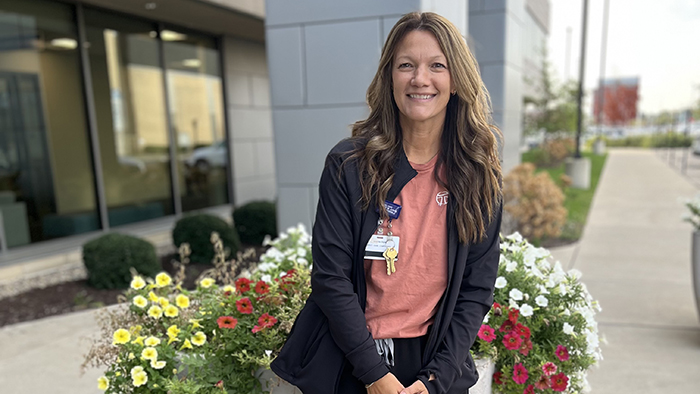
For Amanda Meyer, RN, a routine mammogram changed everything. The longtime HSHS St. John’s Hospital emergency department manager was just 41 when her screening revealed stage zero breast cancer, despite no family history of the disease.
“I knew mammograms could be uncomfortable,” Amanda said, “but they can also detect and save your life.”
After her diagnosis, Amanda underwent two lumpectomies and a month of preventative radiation at the HSHS St. John’s Cancer Center. The care team opened early each morning so she could complete her treatment before starting her emergency room shift.
“It was exhausting,” Amanda recalled. “I broke down during my treatment because you look at your body and think, this hurts, it’s ugly. But faith, family and my coworkers kept me going.”
Her radiologist also reminded her how important it is to manage stress and care for her body while healing. That advice inspired Amanda to rethink her future and ultimately led her to a new calling.
From Patient to Navigator
When an opening became available for a nurse navigator in St. John’s mammography department, Amanda applied and was selected. Today, she walks alongside patients through some of their most uncertain moments—calling when results need follow-up, coordinating biopsies, and providing emotional support.
“I can cry with them since I’ve been through it,” Amanda said. “I feel this job is God’s plan.”
Her own story underscores a vital message she now shares with every patient: Don’t delay your mammogram.
“It doesn’t matter if your results were normal a year ago,” she said. “Things change.”
Why Early Detection Matters
According to Adrian Newson, Oncology Director for HSHS Central Illinois Market, early detection significantly improves outcomes.
“The sooner patients know something is abnormal and intervene, the better their likelihood of early diagnosis, treatment and recovery,” Newson said.
HSHS encourages women with average risk to begin annual mammograms at age 40, or earlier for those with a family history of breast cancer.
Amanda’s journey from early detection to cancer survivor and now patient navigator serves as a reminder that early detection saves lives.
“If my story helps even one woman make that appointment,” Amanda said, “then it’s all worth it.”
Schedule Your Mammogram
Appointments can be conveniently scheduled here or by calling 217-757-6565 for all Illinois HSHS locations.
Quick Facts to Know
For Amanda Meyer, RN, a routine mammogram changed everything. The longtime HSHS St. John’s Hospital emergency department manager was just 41 when her screening revealed stage zero breast cancer, despite no family history of the disease.
“I knew mammograms could be uncomfortable,” Amanda said, “but they can also detect and save your life.”
After her diagnosis, Amanda underwent two lumpectomies and a month of preventative radiation at the HSHS St. John’s Cancer Center. The care team opened early each morning so she could complete her treatment before starting her emergency room shift.
“It was exhausting,” Amanda recalled. “I broke down during my treatment because you look at your body and think, this hurts, it’s ugly. But faith, family and my coworkers kept me going.”
Her radiologist also reminded her how important it is to manage stress and care for her body while healing. That advice inspired Amanda to rethink her future and ultimately led her to a new calling.
From Patient to Navigator
When an opening became available for a nurse navigator in St. John’s mammography department, Amanda applied and was selected. Today, she walks alongside patients through some of their most uncertain moments—calling when results need follow-up, coordinating biopsies, and providing emotional support.
“I can cry with them since I’ve been through it,” Amanda said. “I feel this job is God’s plan.”
Her own story underscores a vital message she now shares with every patient: Don’t delay your mammogram.
“It doesn’t matter if your results were normal a year ago,” she said. “Things change.”
Why Early Detection Matters
According to Adrian Newson, Oncology Director for HSHS Central Illinois Market, early detection significantly improves outcomes.
“The sooner patients know something is abnormal and intervene, the better their likelihood of early diagnosis, treatment and recovery,” Newson said.
HSHS encourages women with average risk to begin annual mammograms at age 40, or earlier for those with a family history of breast cancer.
Amanda’s journey from early detection to cancer survivor and now patient navigator serves as a reminder that early detection saves lives.
“If my story helps even one woman make that appointment,” Amanda said, “then it’s all worth it.”
Schedule Your Mammogram
Appointments can be conveniently scheduled here or by calling 217-757-6565 for all Illinois HSHS locations.
Quick Facts to Know
- 1 in 8 women in the U.S. will develop breast cancer in her lifetime.
- Mammograms can detect cancer up to two years before it can be felt.
- Early detection can increase survival rates to over 90% when treated promptly.
- Even if last year’s mammogram was normal, annual screenings are key to catching changes early.