
Stroke Signs & Symptoms

A stroke is an interruption in the blood flow to our brain from either a clot or a break in the blood vessel.

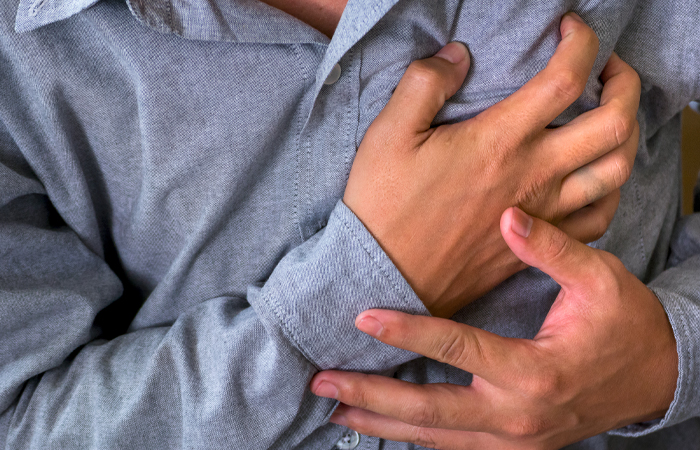
man clutching his chest

If you are experiencing any signs or symptoms of a stroke, call 9-1-1. It is critical for someone who may be having a stroke to be transported to the hospital by trained medical personnel immediately. Early recognition is key, and a stroke is a medical emergency.

On average, every four minutes someone dies of stroke. When a stroke occurs, part of the brain cannot get the blood (and oxygen) it needs, so it begins to die. Brain function, future abilities and life itself are threatened every minute a stroke goes untreated. Every minute the brain is without oxygen, two million brain cells die.

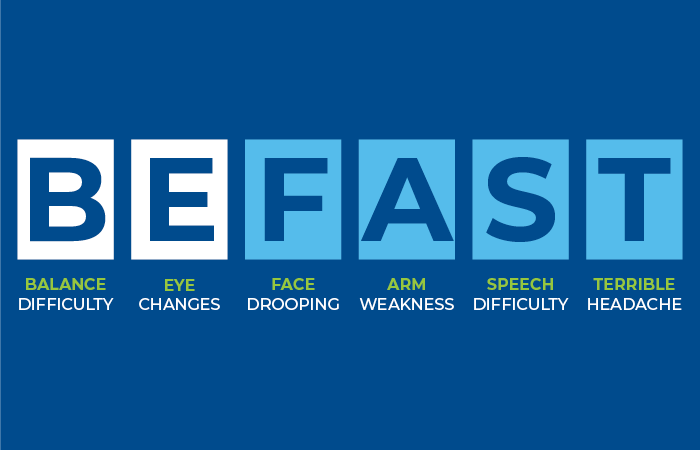
be-fast graphic to spot the signs of stroke

BE-FAST to spot the signs of stroke.

Use the BE-FAST acronym to remember stroke warning signs. If you notice or experience one or more of these symptoms, call 911 immediately, don’t drive to the hospital. It’s important to get treatment as quickly as possible because seconds count when you or a loved one is experiencing a stroke.

B - BALANCE DIFFICULTY. Does the person have difficulty with their walking or balance?

E - EYE CHANGES. Ask the person if they have any sudden vision changes in one or both eyes.

F - FACE DROOPING. Ask the person to smile. Does one side of the face droop?

A - ARM WEAKNESS. Ask the person to raise both arms. Does one arm drift downward?

S - SPEECH DIFFICULTY. Ask the person to repeat a simple phrase. Is their speech slurred or difficult to understand?

T - TERRIBLE HEADACHE. Does the person have sudden onset of a severe headache with no known cause? 

Risk Factors

Risk factors such as age, genetics, gender and race cannot be controlled. However, there are several risk factors that you can control. If your health care provider has already identified that you have any of these risk factors, it is very important to create a plan to help reduce your risk of stroke.

  • Smoking
  • High blood pressure (hypertension)
  • Alcohol consumption and illegal drug use
  • Stress
  • Diabetes
  • Obesity
  • Transient ischemic attack (TIA)
  • Inactivity
  • Unhealthy diet
  • Abnormal cholesterol
  • Atrial fibrillation
  • Carotid artery disease
  • Peripheral vascular disease